Workshop Report: 29th Annual Research Workshop – 2026 “Transforming Tanzania’s Blue Economy for Inclusive and Sustainable Development”
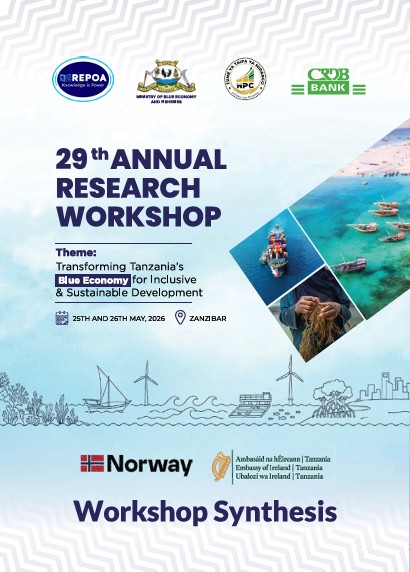
REPOA’s Annual Research Workshop (ARW) remains Tanzania’s longest-running and largest research workshop hosted by a Tanzanian think tank, bringing together researchers, policymakers, research users, and development stakeholders to discuss research findings, examine their implications for policy development, and identify priorities for further strategic research. The 29th REPOA’s ARW was held from 25–26 May 2026 at […]
Potential implications of public agricultural investment on economic outcomes in Tanzania
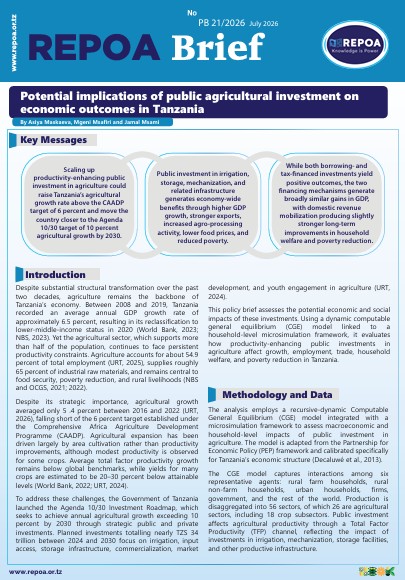
This Policy Brief assesses the potential economic and social impacts of nearly TZS 34 trillion in planned agricultural investments between 2024 and 2030, targeting irrigation, access to inputs, storage infrastructure, commercialisation, market development, and youth engagement in agriculture. READ ON…!
Governing LNG Development in Tanzania: Institutional Evolution, Governance Constraints, and Strategic Reform Priorities
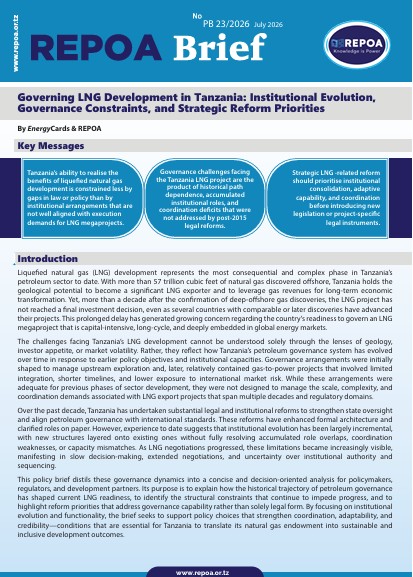
This Policy Brief seeks to support policy choices that strengthen coordination, adaptability, and credibility—conditions that are essential if Tanzania is to translate its natural gas endowment into sustainable and inclusive development outcomes. READ ON…!
Smallholder farmers’ access and use of knowledge and information to enhance agricultural productivity in rural Tanzania
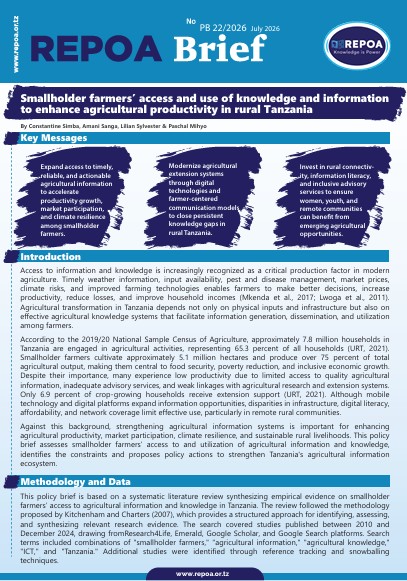
This Policy Brief assesses smallholder farmers’ access to and utilization of agricultural information and knowledge, identifies the constraints and proposes policy actions to strengthen Tanzania’s agricultural information ecosystem. READ ON…!
Strengthening Agricultural Financing and Budget Allocation for Inclusive Growth
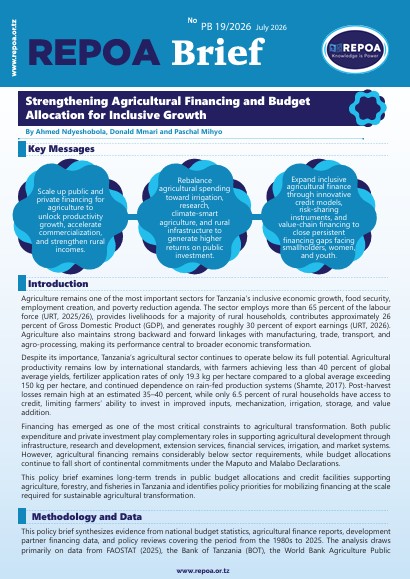
This Policy Brief synthesizes evidence from national budget statistics, agricultural finance reports, development partner financing data, and policy reviews covering the period from the 1980s to 2025. The analysis draws primarily on data from FAOSTAT (2025), the Bank of Tanzania (BOT), the World Bank Agriculture Public Expenditure Review (2022), the Agricultural Sector Development Programme II […]
Financing Tanzania’s Blue Future: Accessing Innovative Capital for a High-Potential Economy
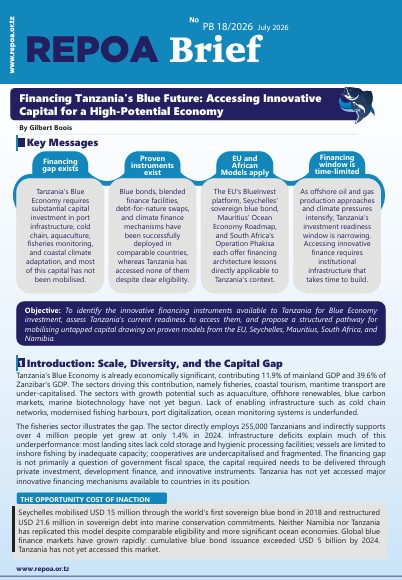
This Policy Brief seeks to identify the innovative financing instruments available to Tanzania for Blue Economy investment, assess Tanzania’s current readiness to access them, and propose a structured pathway for mobilising untapped capital drawing on proven models from the EU, Seychelles, Mauritius, South Africa, and Namibia. READ ON…!
Lessons from the South – sharing Namibia’s Blue Economy journey for Tanzania
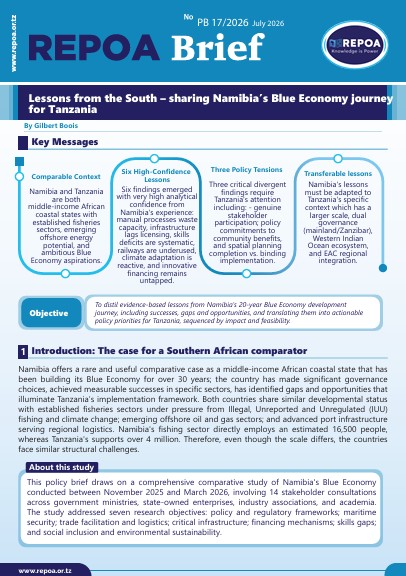
This policy brief draws on a comprehensive comparative study of Namibia’s Blue Economy conducted between November 2025 and March 2026, involving 14 stakeholder consultations across government ministries, state-owned enterprises, industry associations, and academia. Six findings emerged with very high analytical confidence from triangulated evidence across multiple independent sources. Tanzania can act on these with high […]
From Potential to Performance: Strengthening Tanzania’s Blue Economy Governance Architecture
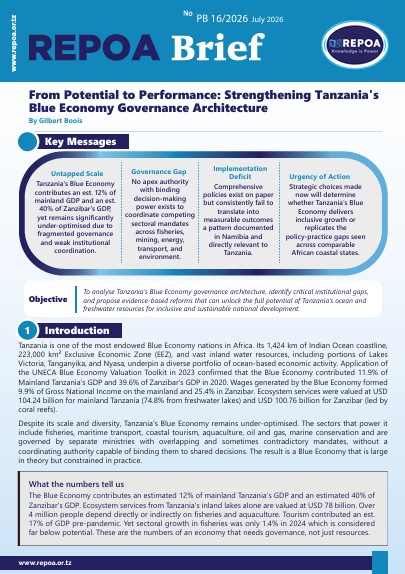
This policy brief draws on evidence from a comprehensive comparative study of Namibia’s Blue Economy experience conducted between November 2025 and March 2026. Namibia, as a middle-income African coastal state with 20+ years of ocean governance experience and a finalised Blue Economy Policy (2022–2031), provides a relevant available comparator for Tanzania. The study involved 14 […]
Business Environment Reforms and Structural Transformation in Tanzania
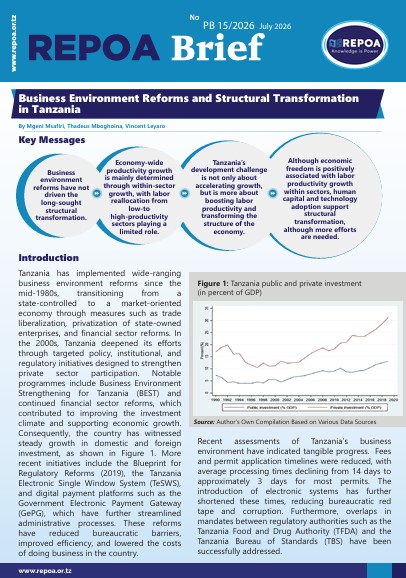
This Policy Brief presents an assessment of whether Tanzania’s business environment reforms over the past three decades have translated into productivity-enhancing structural transformation of the economy. Utilizing shift-share decomposition and econometric analysis for the 1990–2018 period, this brief presents stylized facts about structural transformation in Tanzania and analyses the impact of reforms on productivity growth […]
Accelerating Agricultural Transformation for Structural Change in Tanzania
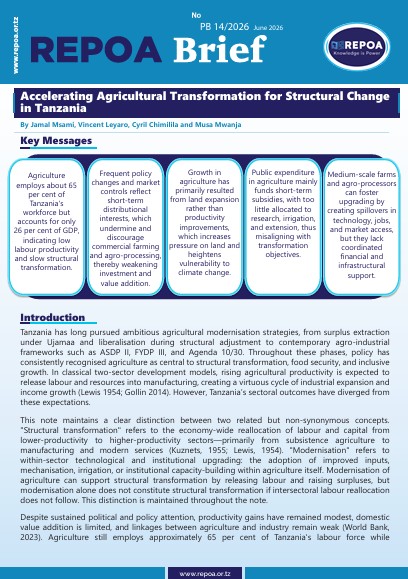
This study examines how political incentives, institutional arrangements, and evolving development ideas have shaped Tanzania’s agricultural modernisation agenda and its contribution to structural transformation. It traces the evolution of agriculture–industry linkages across major political-economic regimes, analysing how shifts from state-led strategies to market-oriented and agro-industrial approaches have influenced policy priorities and implementation outcomes. In doing […]
Accelerating Industrial Transformation for Structural Change in Tanzania
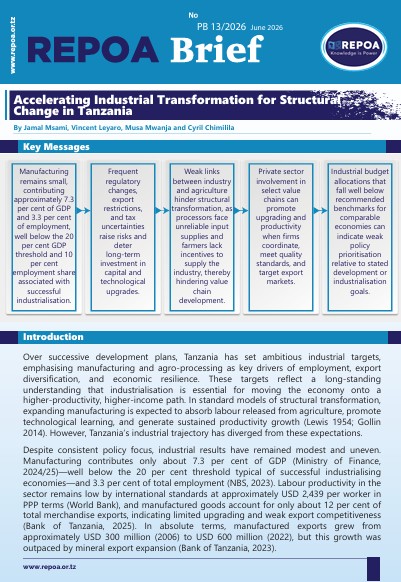
This policy note examines how political incentives, institutional frameworks, and economic systems have shaped Tanzania’s industrial transformation. The analysis is structured around four political-economy dimensions—interests, incentives, power relations, and ideational frameworks—which together explain why repeated industrial strategies have had limited success in upgrading and creating employment.READ ON…!
Maritime Security as a Foundation for Tanzania’s Blue Economy and National Resilience
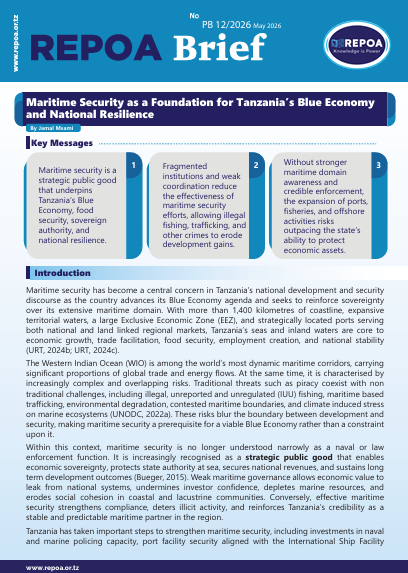
Tanzania has taken important steps to strengthen maritime security, including investments in naval and marine policing capacity, port facility security aligned with the International Ship Facility Security (ISPS) Code, participation in regional cooperation mechanisms, ratification of relevant international instruments, and the establishment of the National Joint Operations Centre (NJOC) as a platform for inter agency […]
Public confidence in Tanzania’s judicial system is strong, but gaps in access to justice remain
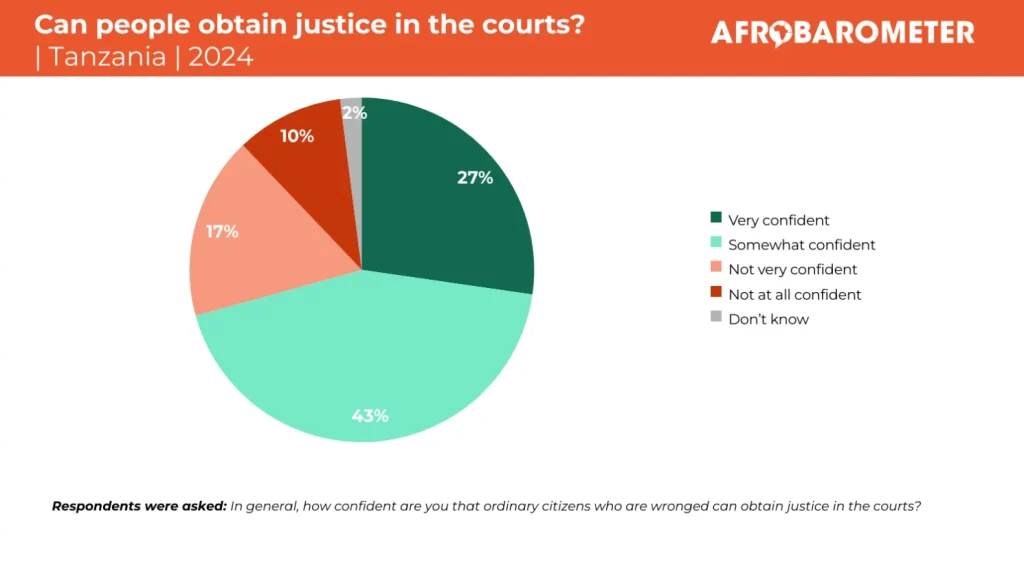
This dispatch reports findings from a special survey module on access to justice included in Afrobarometer’s Round 10 surveys. Results show that while a majority of Tanzanians express confidence that ordinary people can obtain justice in the courts, significant minorities remain concerned about the affordability of taking a case to court, as well as the […]
Trade Facilitation and Logistics as Pillars of Tanzania’s Blue Economy Competitiveness
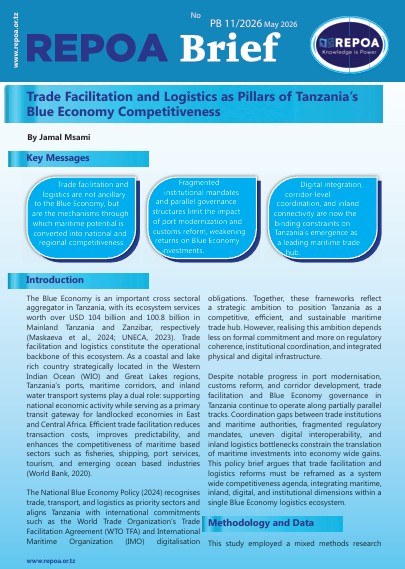
This Policy Brief calls for trade facilitation and logistics reforms to be repositioned as a system wide competitiveness agenda. It advocates for an integrated Blue Economy logistics ecosystem that aligns maritime, inland transport, digital infrastructure, and institutional reforms to strengthen trade efficiency, economic resilience, and sustainable growth. READ ON…!
Financing the Blue Economy for Tanzania’s Marine and Inland Water Transformation
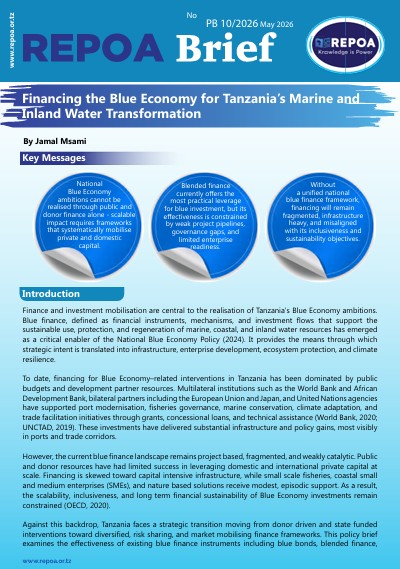
This Policy Brief examines the effectiveness of existing blue finance instruments including blue bonds, blended finance, and risk mitigation mechanisms, assesses systemic constraints, and outlines policy directions to strengthen alignment between finance, development priorities, and international good practice. READ ON…!
Social and Environmental Safeguards as Foundations for an Inclusive and Resilient Blue Economy in Tanzania
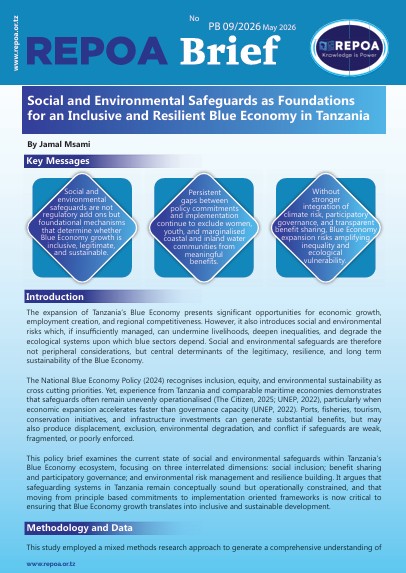
This Policy Brief examines the current state of social and environmental safeguards within Tanzania’s Blue Economy ecosystem, focusing on three interrelated dimensions: social inclusion; benefit sharing and participatory governance; and environmental risk management and resilience building. It argues that safeguarding systems in Tanzania remain conceptually sound but operationally constrained, and that moving from principle based […]