Sustaining Tanzania’s Marine Resources: Opportunities and Challenges for Strengthening Co-Management in Coastal Communities
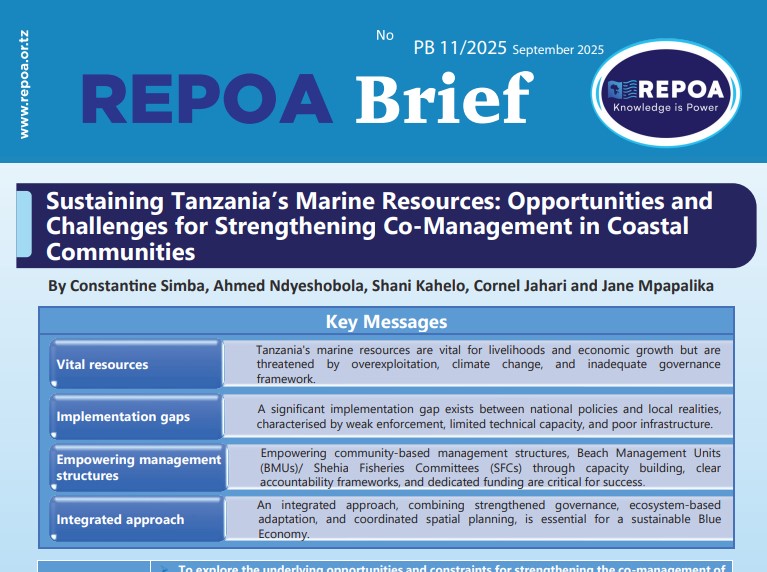
explore the underlying opportunities and constraints for strengthening the co-management of Tanzania’s marine resources in Coastal Communities.
From Shores & Households to Markets: Dynamics of Seaweed Farming in Tanzania
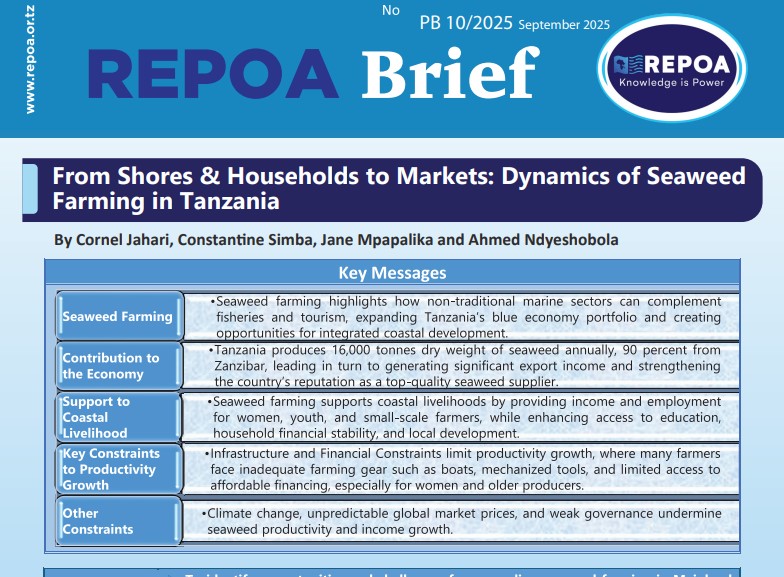
This Policy Brief identifies opportunities and challenges for expanding seaweed farming in Mainland Tanzania and Zanzibar, while strengthening sector resilience. READ ON…!
Learning from the Experience of the Namibian Blue Economy 2
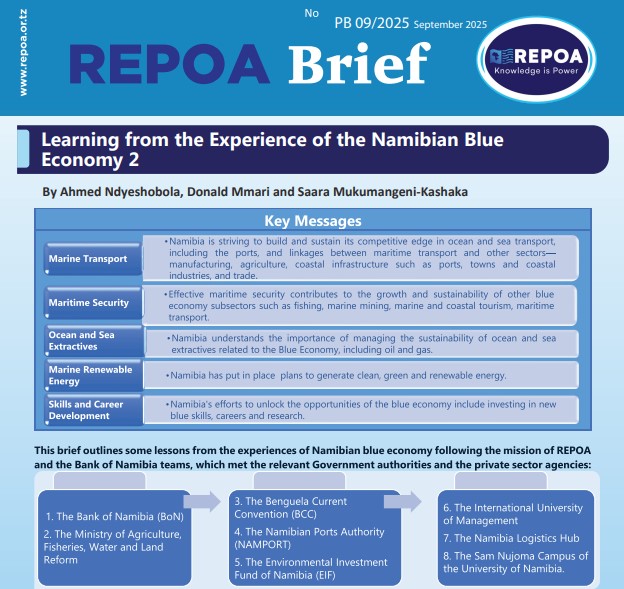
This Policy Brief outlines some lessons from the experiences of Namibian blue economy following the mission of REPOA and the Bank of Namibia teams, which met the relevant Government authorities and the private sector agencies there. READ ON…!
Unlocking the Blue Economy: Insights from the Fisheries Sector in Coastal Mainland Tanzania and Zanzibar
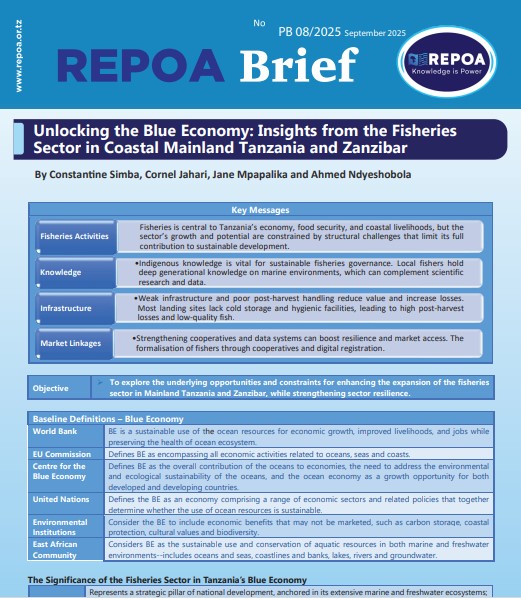
This Policy Brief explores the underlying opportunities and constraints for enhancing the expansion of the fisheries sector in Mainland Tanzania and Zanzibar, while strengthening sector resilience. READ ON…!
Learning from the Experience of the Namibian Blue Economy 1
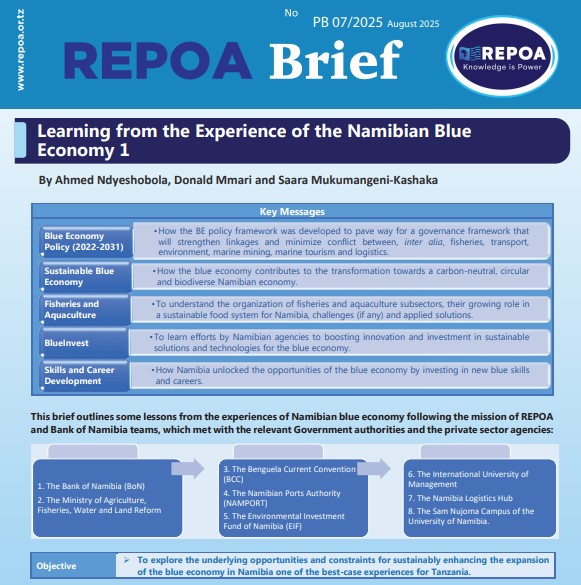
This Policy Brief outlines some lessons from the experiences of Namibian blue economy following the mission of REPOA and Bank of Namibia teams, which met with the relevant Government authorities and the private sector agencies there. READ ON…!
Building on Productive Capacities in Tanzania-Opportunities and Constraints in the Horticulture Sub-Sector
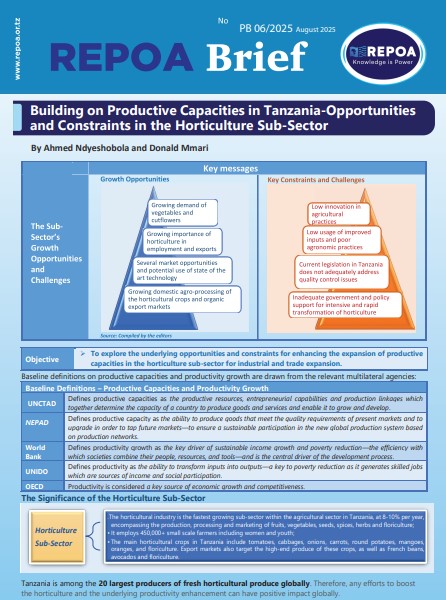
This Policy Briefs explores the underlying opportunities and constraints for enhancing the expansion of productive capacities in the horticulture sub-sector for industrial and trade expansion in Tanzania. For details please, READ ON…!
Building productive capacities in Tanzania—opportunities and constraints in the coffee sub-sector
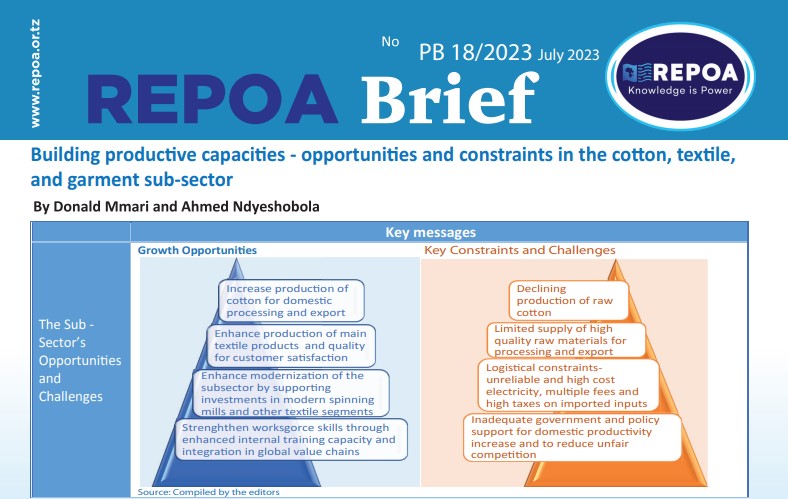
It is recommended that this framework of analysis is adapted to inform policy analysts, private sector practitioners, and decision makers in public institutions responsible for promoting economic growth; agriculture and cooperative development; investments, trade, and industrial development; private sector development, and providing the requisite political champion for the coffee sub-sector. It is the ability these […]
Building productive capacities – opportunities and constraints in the cashew nut sub-sector

This policy brief provides a framework of analysis on building productive capacities in Tanzania – regarding opportunities and constraints in the cashew nut sub-sector. This brief seeks to inform policy analysts, private sector practitioners, and decision makers in the public institutions responsible for promoting economic growth, industrial development, investments, trade expansion, private sector development, and […]
Building productive capacities – opportunities and constraints in the tea sub-sector

This policy brief provides a framework of analysis on building productive capacities in Tanzania – regarding opportunities and constraints in the tea sub-sector. This brief seeks to inform policy analysts, private sector practitioners, and decision makers in the public institutions responsible for promoting economic growth, industrial development, investments, trade expansion, private sector development, and providing […]
Building productive capacities in Tanzania – opportunities and constraints in the coffee sub-sector

This policy brief provides a framework of analysis on building productive capacities in Tanzania – regarding opportunities and constraints in the coffee sub-sector. This brief seeks to inform policy analysts, private sector practitioners, and decision makers in public institutions responsible for promoting economic growth; agriculture and cooperative development; investments, trade, and industrial development; private sector […]
Harnessing the global opportunities for enhancing productive capacities in Tanzania
This policy brief provides a framework of analysis regarding harnessing the global opportunities for enhancing productive capacities in Tanzania. It seeks to inform policy analysts, private sector practitioners, and decision makers in public institutions responsible for promoting economic growth, industrial development, investments, trade expansion, and private sector development. It is the ability these actors to […]
Harnessing the continental opportunities for enhancing productive capacities in Tanzania
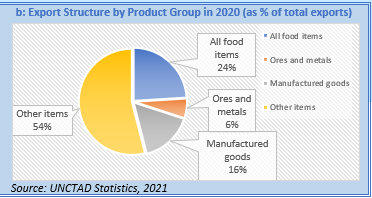
This policy brief provides a framework of analysis regarding harnessing the continental opportunities for enhancing productive capacities in Tanzania. It seeks to inform policy analysts, private sector practitioners, and decision makers in public institutions responsible for promoting economic growth, industrial development, investments, trade expansion, and private sector development. It is the ability these actors to […]
Participation in regional and global value chains can enhance productive capacity for industrial and trade expansion
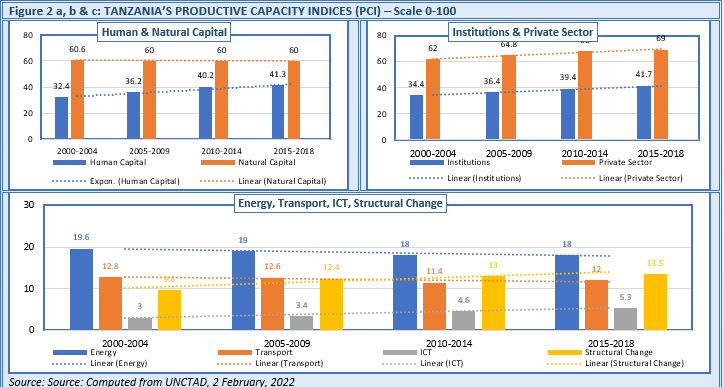
This policy brief provides a framework of analysis regarding the participation in regional and global value chains to enhance productive capacity for industrial and trade expansion. It seeks to inform policy analysts, private sector practitioners, and decision makers in public institutions responsible for promoting economic growth, industrial development, investments, trade expansion, and private sector development. […]
Drivers of productive capacity for industrial and trade expansion in Tanzania
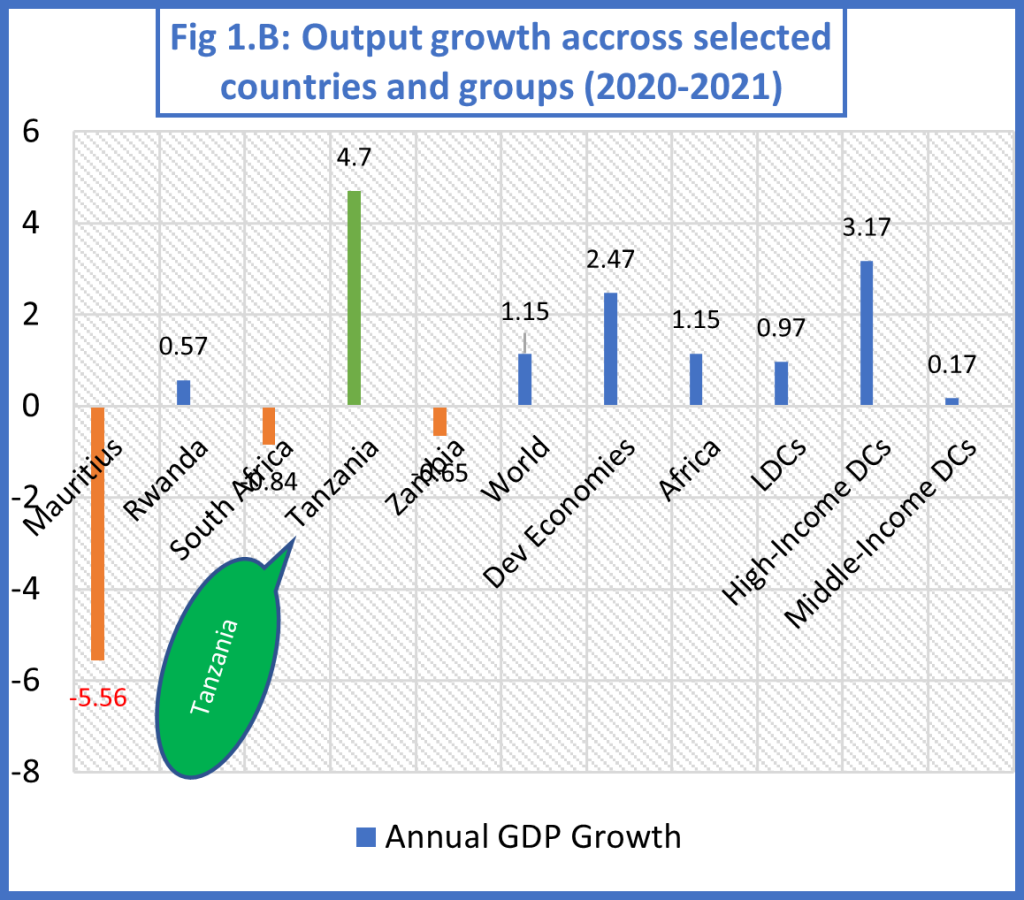
This policy brief provides a framework of analysis seeking to inform policy analysts, private sector practitioners, and decision makers in public institutions responsible for promoting economic growth, industrial development, investments, trade expansion, and private sector development. It is the ability these actors to address the various constraints to productivity growth that Tanzania can sustain its […]
Finance and African development – dynamics and underlying debt risks
This policy brief looks at the Least Developed Countries—32 African countries classified by the UN as LDCs, whereas the rest are classified as either Lower Middle-Income Countries or Middle-Income Countries. It looks at the Gradual graduation from Least Developed Country (LDC) category as being constrained by lower incomes, social and health challenges, and limited finances […]
Finance and African development—pursuit for inclusivity
This policy brief looks at the Least Developed Countries—32 African countries classified by the UN as LDCs, whereas the rest are classified as either Lower Middle-Income Countries or Middle-Income Countries. It looks at the policy thrust of ensuring that no one is left behind nor by the wayside—amounting to simultaneous reduction of poverty and inequality. […]