Uwezeshaji wa Wananawake Kwenye Uzalishaji,Utafutaji wa Kipato, Umiliki wa Raslimali na Uongozi KupitiaMpango wa Kukuza Uwezo wa Kaya Maskini (PSSN)
Kitabu kinachohusu Uwezeshaji wa Wanawake Tanzania kama sehemu ya Sera za Kudumisha Ustawi wa Jamii (Empowering Women in Tanzania in the Contexts of Contemporary Social Policy) kimetolewa na REPOA kwa madhumuni ya kutoa uchambuzi wa kisera, matukio na taasisi ambazo ni sehemu ya mihimili ya jitihada za serikali za kuwawezesha wanawake Tanzania. Dokezo hili linatoa […]
Uwiano Kati ya Aina ya Kazi, Taarifa Kuhusu Kazi,Stadi za Kazi, na Elimu
Kwenye dokezo hili tunanatoa muhstasari mfupi wa sura mbali mbali zilizopo kwenye kitabu kiitwacho ‘Youth Transition from School to Work: A Case Study of VETA in Tanzania (Kipindi cha Mpito kwa Vijana Kati ya Mafunzo na Ajira: Mchango wa VETA Tanzania), chenye lengo la kuongeza uelewa wa matatizo wanayopitia vijana kwenye jitihada zao za kutafuta […]
The Work, Information, Skills and Education Nexus in the Transition from School to Work
This brief summarises the theoretical chapters in the book on Youth Transition from School to Work: A Case Study of VETA in Tanzania whose aim is to increase understanding about the barriers to youth employment and transition to work in the context of Tanzania’s new industrialization drive. The brief concentrates on key factors that influence […]
Women empowerment in production, income generation, Access to Resources and Leadership
This brief summarises results from a study that assessed the extent to which social assistance offered by TASAF through the PSSN contributes to the empowerment of women in terms of increasing their economic, political and social influence on their lives, their households and their communities.
Understanding the resource curse: A large-scale experiment
on corruption in Tanzania
Although there seems to be a consensus that a resource curse often exists (with the notable exceptions of Brunnschweiler and Bulte (2008) and van der Ploeg and Poelhekke (2010)), the empirical literature faces greater challenges in establishing why natural resource wealth is often associated with undesirable outcomes, because cross-country comparisons are plagued with endogeneity issues […]
Youth Transformation from School to Work in Tanzania
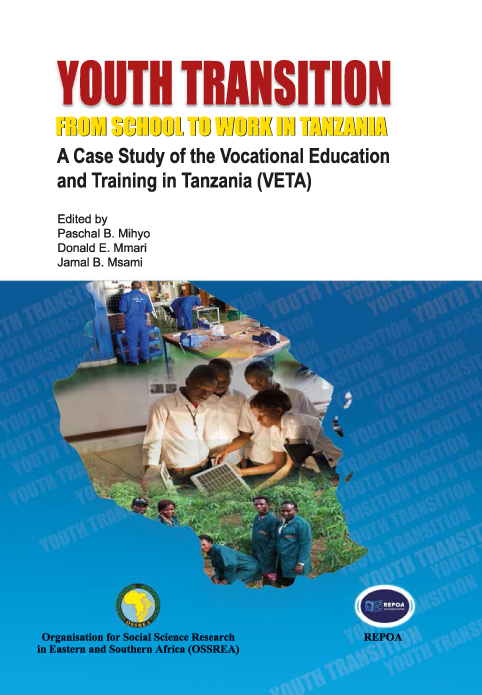
A Case Study of the Vocational Education and Training in Tanzania (VETA) The economic downturn and declining social sector performance in the period 1980-1995 have substantially influenced the debate on skills supply and demand in Tanzania. The downturn saw a substantial decline in the key skills indicator of literacy that had reached a high of […]
Empowering Women in Tanzania

IN THE CONTEXT OF CONTEMPORARY SOCIAL POLICY REFORMS The policy focus on women empowerment has gathered traction lately partly as a result of encouraging the growth of the world economy, a renewed focus on inequality, and the initial success of large-scale income and livelihoods social programmes. Efforts aiming at empowerment have largely been distributional, characterised […]
Institutional Innovations and Barriers to Competitiveness
Case Studies of Smallholder Farmers in Tanzania The research informing this book examines the potential for various forms of institutional innovations in building competitiveness of smallholder agriculture in Tanzania. It was inspired by a review of the performance of the agricultural sector since Tanzanian independence in 1961, from which it is hypothesized that persistent structural […]
Institutional Innovations and Barriers to Competitiveness: Policy Brief
Case Studies of Smallholder Farmers in Tanzania Tanzania’s policy path has been characterized by institutional reforms aimed at increasing efficiency and productivity in key sectors of the economy. This brief examines the potential of various forms of institutional innovations in building competitiveness of smallholder agriculture in Tanzania. Evidence used shows that while some policies and […]
Mabadiliko ya Kitaasisi na Vikwazo vya Ushindani Kwenye Masoko: Tafiti Kuhusu Wakulima Wadogo Tanzania
Historia ya sera nchini Tanzania imekuwa ni ya mabadiliko ya mara kwa mara ambayo lengo lake limekuwa ni kuongeza ufanisi na uzalishaji katika sekta muhimu za uchumi. Dokezo hili linatoa muhtasari wa kitabu kilichotokana na utafiti uliochunguza uwezo wa mabadiliko mbali mbali ya sera kuiongezea sekta ya kilimo, hususan wakulima wadogo, nguvu ya ushindani katika […]
Non-resource taxation in a resource rich setting
A broader tax base will enhance tax compliance in Tanzania Huge reservoirs of natural gas have been discovered offshore the southern coast of Tanzania. The country might become a large producer of gas, and a potential exporter of liquefied natural gas (LNG) during the next decades.
Limits to citizen engagement and downward accountability in the context of decentralization by devolution in Tanzania
This brief examines how the process of decentralization by devolution in Tanzania affects local democracy and the efficiency and effectiveness of service delivery. The most common arguments for democratic decentralization in the literature are two, an efficiency argument and a normative argument. The efficiency argument is based on the fact that knowledge about needs and […]
Financial discretion in LGAs and its effect on delivery of financial services through special funds for women and youth
This brief examines how the process of decentralization by devolution in Tanzania affects outcomes in terms of local government authorities (LGAs) capacity to deliver financial services to the poor. These outcomes depend on the level of administrative autonomy given to LGAs by the central government, their own capacity to execute, and ability to raise financial […]
National Food Reserve Agency (NFRA) Not for Smallholder Farmers
Poverty level remains quite high in the country, more so in rural than urban areas. As the Household Budget Survey of 2012 shows, while 10% and 28% of Tanzanians are below food and basic needs poverty lines respectively, the corresponding figures for rural areas are 11% and 33% respectively (URT, 2014). Marketing problems for small-holder […]
Research and Policy Nexus: Perspectives from Twenty Years of Policy Research in Tanzania
This book is intended to highlight the key policy issues and policy space that policy research institutions like REPOA have been occupying and are to continue to occupy in future. A typical book of this nature would have demanded a team of editors and authors from many institutions, since influencing positive policy change takes the […]
The challenge of intermediary coordination in smallholder sugarcane production in Tanzania
Orthodox approaches to development view the market as a key institution for driving economic transformation and for fostering innovation and competitiveness. The working of markets alone, however, does not always lead to improved outcomes such as increase in productivity or production efficiency in the context of smallholders. The role of non-market institutions, therefore, remains important. […]