Policy Innovations for Improved Agricultural Production in Tanzania
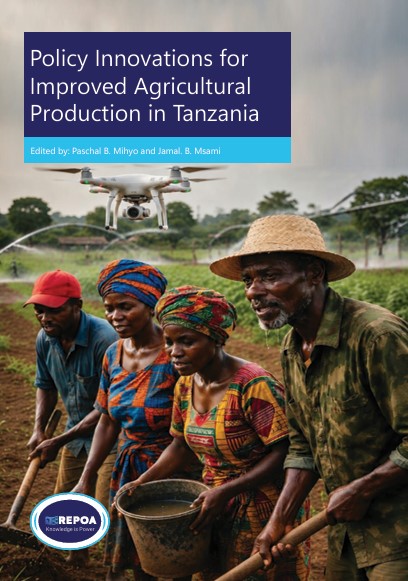
This book emerges as a timely and significant contribution to the national and regional discourse on agricultural development. This volume brings together a diverse range of perspectives, grounded in empirical research and informed by practical experience, to explore how policy innovations can unlock the latent potential of Tanzania’s agricultural sector. The book does not merely […]
REPOA’s Annual Report 2025
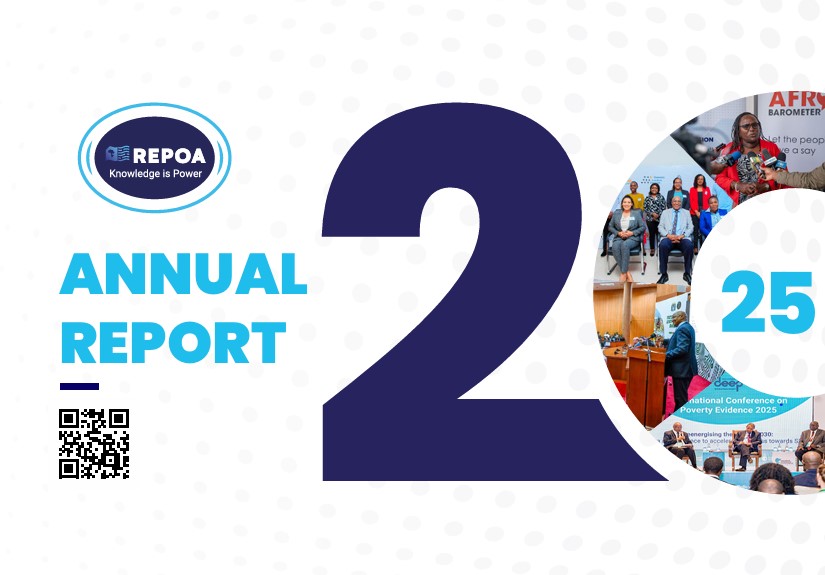
Dear esteemed stakeholders, with great appreciation and a deep sense of responsibility we present REPOA’s Annual Report for 2025 – the first year of implementing our Seventh Strategic Plan (2025–2029). This marked a pivotal transition from the Sixth Strategic Plan and set the tone for the next phase of our institutional growth, policy influence, and […]
Closing the Financial Inclusion Gender Gap to Unlock Women’s Entrepreneurial Capacity in Tanzania
This study underscores that any policy action geared towards improving the level of financial inclusion of disadvantaged women should focus on enhancing their level of education, employment, and access (proximity) to financial institutions, among others. READ ON…!
Effects of Climate Smart Agriculture (CSA) on food security and incomes of smallholder farmers in Tabora region, Tanzania
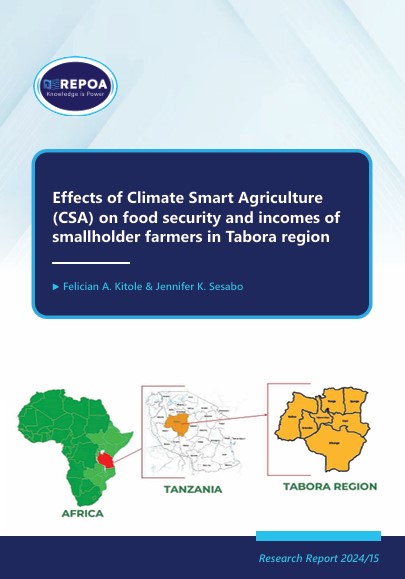
Results of this study indicate that CSA adoption significantly improves both food security and household income. Key determinants include socio-demographic factors, such as gender and age, economic factors like credit financing availability and market access, infrastructural elements including irrigation facilities, and attitudinal aspects such as farmers’ perceptions of climate risks and their attitudes towards sustainable […]
Effects of Climate Smart Agricultural Technologies on Household Food Security in Zanzibar
Results of this study showed that the factors that significantly influence the adoption of Climate Smart Agriculture (CSA) technologies are age, education level, land size, farming experience, land tenure, farm income, rice yield and credit. The endogenous switching model analysis showed that the adopter farmers are more likely to be food secure compared to non-adopters. […]
Potential Impact of Renewable Energy Technologies as an Enabler of Economic Growth in Tanzania
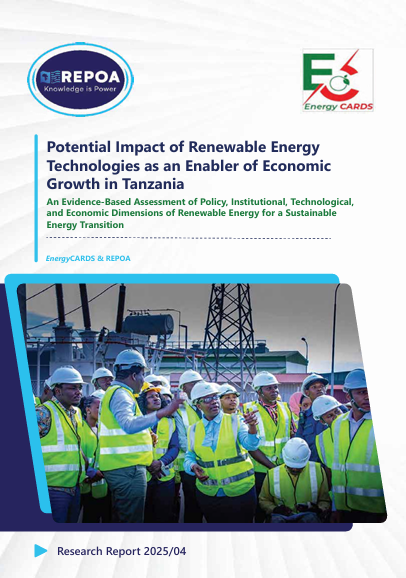
This report provides a comprehensive analysis of Tanzania’s renewable energy landscape, drawing on global benchmarking, stakeholder engagement, field assessments, and rigorous data analysis. It captures both institutional and grassroots realities of RET implementation, offering insights into the opportunities, challenges, and transformative potential of renewable energy across sectors and regions. This work reflects the contributions of […]
Commodity Prices and City Markets in Tanzania: The Case of Maize Markets
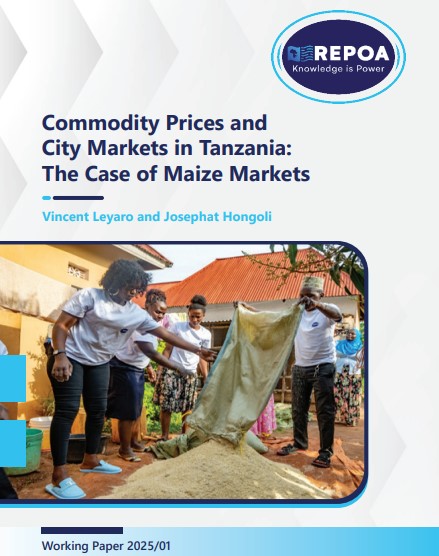
Using community-level and field survey data complemented with regional and district monthly commodity prices data across the country, this study takes the first step towards understanding rent extraction in the crop market in Tanzania. The market margins analysis from farmgate to regional wholesale to city retail markets showed that the regional market margins account for […]
Tax policies and informality in Tanzania
This study examines the relationship between tax policies and informality in Tanzania. Specifically, it analyses how changes in tax policies affect the behaviour of individuals in the labour market and how these changes impact the level of inequality and poverty in Tanzania. Tanzania’s informal economy, accounting for over 60% of employment and nearly 40% of […]
Buffering Deprivation and Vulnerability among Informal Workers in the Tourism Sector in Kilimanjaro and Arusha
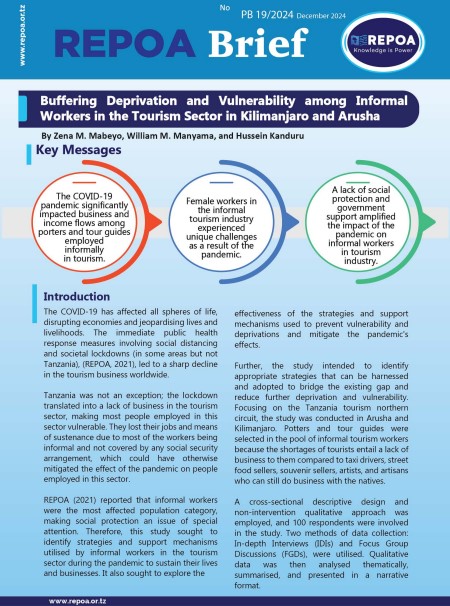
This study sought to identify strategies and support mechanisms utilised by informal workers in the tourism sector during the pandemic to sustain their lives and businesses. READ ON…!
Aflatoxin Awareness and Food Security among Smallholder Farmers in Tanzania
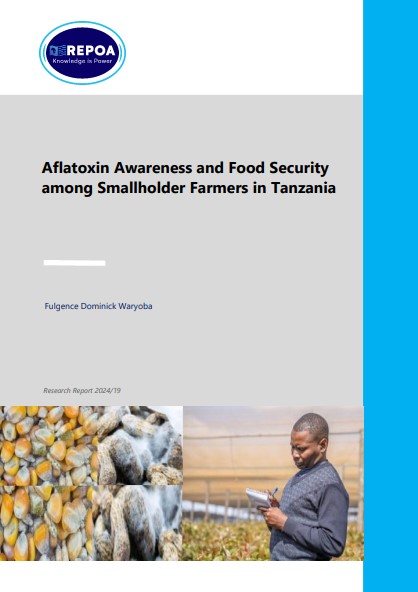
The findings show that aflatoxin awareness has a positive and significant influence on crop quality, hence food security. As was the opinion from many farmers, the Ministry of Agriculture, in collaboration with other development stakeholders, should give high priority to aflatoxin awareness campaigns. READ ON…!
Considerations of Climate Change Mitigation and Adaptation in National Development Plans in Tanzania
This study intended to understand the extent of climate change considerations in national development plans in Tanzania. The specific objectives were to examine the extent of policy coherence across priority sectors, national development plans and national climate change adaptation goals. READ ON…!
The health effects of Aflatoxin and their impact on food security among smallholder farmers in Tanzania
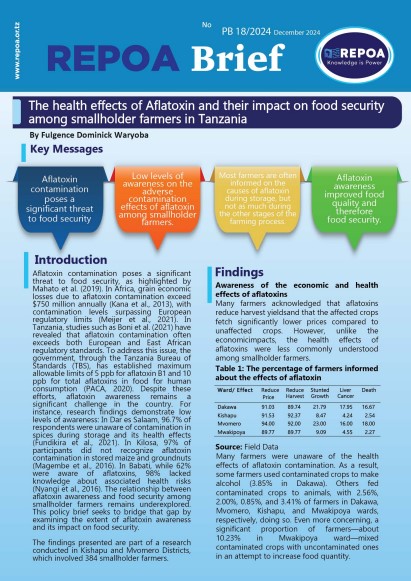
This policy brief seeks to bridge that gap by examining the extent of aflatoxin awareness and its impact on food security. READ ON…!
Leveraging the Digital Ecosystem for Improved Competitiveness and Productivity: Evidence from Manufacturing Entreprises in Tanzania
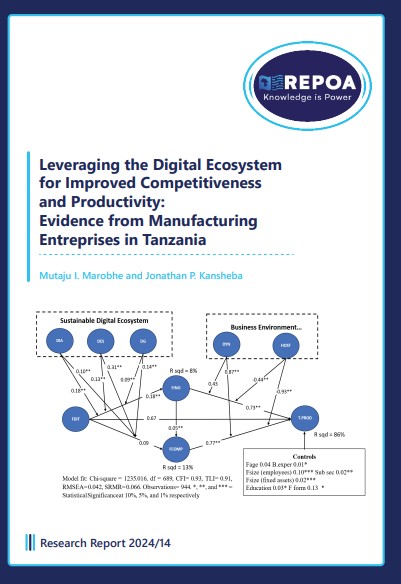
The primary findings for this study indicate that there is no statistically significant relationship between productivity and digitalization. However, the findings suggested that the relationship between productivity and digitalization was mediated by innovation and competitiveness. The results also show that the benefits of digitalization for innovation and competitiveness are amplified by a sustainable digital ecosystem. […]
From land expansion to efficiency: Tanzania’s hope for sustainable rice production
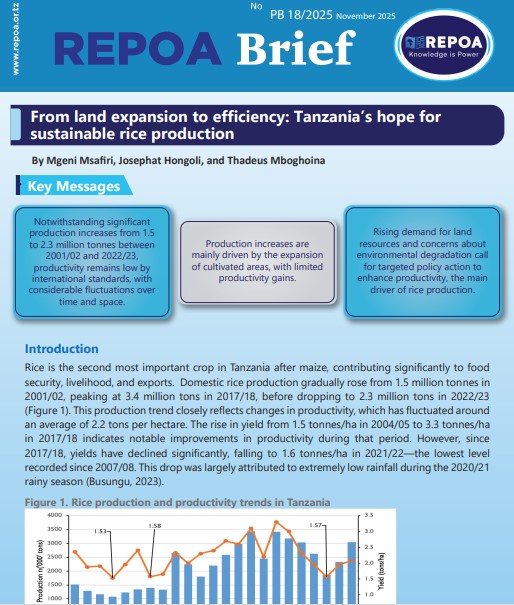
Over the years, Tanzania has witnessed significant expansion in domestic rice production, making it the second most important food crop in the country. This Policy Brief proposes a number of policy measures to improve rice yields in Tanzania – to catch up with the global and regional production averages. READ ON…!
Barriers to accessing quality daycare services for Most Vulnerable Children in Low-Income areas of Dar es Salaam
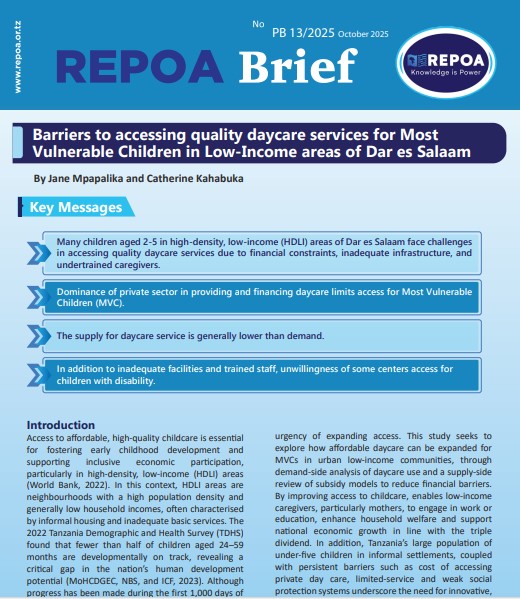
This Policy Brief presents barriers to accessing quality daycare services for Most Vulnerable Children (MVCs) in high-density, low-income (HDLI) areas of Dar es Salaam. It highlights both demand- and supply-side constraints in HDLI contexts and offers policy recommendations to improve access, affordability, and the quality of childcare services for MVCs in Tanzania. READ ON…!
Cleaner cooking solutions: Optimizing biomass briquettes to replace charcoal and mitigate climate change in Tanzania
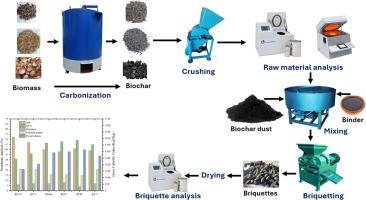
In Tanzania, overreliance on charcoal and firewood for domestic energy has intensified deforestation and environmental degradation, creating an urgent need for sustainable biomass-based fuels. This study investigates the optimization of biomass briquettes produced from locally available agricultural residues (coconut shell, palm kernel shell, rice husk) and forest wastes as sustainable alternatives to charcoal. Click on […]